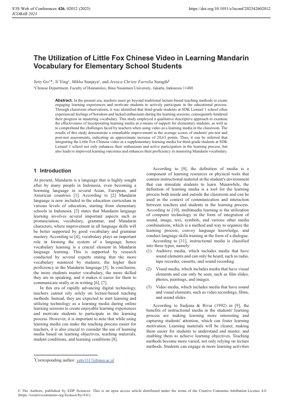
'Little Fox Chinese' वीडियो का उपयोग करके प्राथमिक विद्यालय के छात्रों में चीनी शब्दावली अधिग्रहण प्रभावशीलता बढ़ाने पर शोध
'Little Fox Chinese' वीडियो को एक सहायक माध्यम के रूप में उपयोग करते हुए, प्राथमिक विद्यालय के छात्रों की चीनी शब्दावली निपुणता और सीखने की सहभागिता बढ़ाने में इसकी प्रभावशीलता पर एक गुणात्मक अध्ययन।
होमपेज »
दस्तावेज़ »
'Little Fox Chinese' वीडियो का उपयोग करके प्राथमिक विद्यालय के छात्रों में चीनी शब्दावली अधिग्रहण प्रभावशीलता बढ़ाने पर शोध
1 परिचय
मैंडरिन चीनी की वैश्विक प्रासंगिकता बढ़ रही है, जिसमें इंडोनेशिया भी शामिल है, जहां इसे प्राथमिक विद्यालय स्तर से शुरू करते हुए शैक्षिक पाठ्यक्रमों में तेजी से शामिल किया जा रहा है। यह शोध भाषा शिक्षाशास्त्र में एक महत्वपूर्ण चुनौती का समाधान करना चाहता है: छात्रों की भागीदारी और शब्दावली में प्रवीणता। SDK Lemuel 1 स्कूल में अवलोकन से पता चला कि तीसरी कक्षा के छात्र पारंपरिक चीनी भाषा की कक्षाओं में अक्सर ऊब और उत्साह की कमी महसूस करते हैं, जो उनकी शब्दावली अधिग्रहण में बाधा डालती है। यह अध्ययन डिजिटल शिक्षण मीडिया, विशेष रूप से "Little Fox Chinese" वीडियो श्रृंखला की क्षमता का पता लगाता है, इस सीखने के अनुभव को बदलने, भागीदारी बढ़ाने और युवा शिक्षार्थियों के लिए शब्दावली सीखने के परिणामों में सुधार करने में।
2 साहित्य समीक्षा एवं सैद्धांतिक ढांचा
यह खंड भाषा अधिग्रहण और शैक्षिक प्रौद्योगिकी के क्षेत्र में मौजूदा शोध के आधार पर इस अध्ययन के लिए एक सैद्धांतिक आधार स्थापित करता है।
2.1 चीनी भाषा अर्जन में शब्दावली की भूमिका
शब्दावली को सामान्यतः भाषा क्षमता की आधारशिला माना जाता है। शोध से पता चलता है कि शब्दावली की महारत सुनने, बोलने, पढ़ने और लिखने के कौशल के विकास से सीधे संबंधित है। चीनी जैसी भाषा के लिए, जिसकी एक विशिष्ट ध्वनि प्रणाली और लिपि-आधारित लेखन प्रणाली है, एक मजबूत शब्दावली आधार इसकी जटिलताओं (जिसमें स्वर और चीनी अक्षरों की पहचान शामिल है) को संभालने के लिए अत्यंत महत्वपूर्ण है।
2.2 आधुनिक शिक्षण पद्धतियों में अधिगम माध्यम
डिजिटल युग में शिक्षण को शुद्ध व्याख्यान-आधारित पद्धति से परिवर्तन की मांग है। अधिगम माध्यम को उन उपकरणों के रूप में परिभाषित किया जाता है जो छात्रों को प्रेरित कर सकते हैं और सीखने की प्रक्रिया को सुगम बना सकते हैं। उनका प्रभावी उपयोग अधिगम उद्देश्यों, छात्रों की आवश्यकताओं और विशिष्ट शिक्षण संदर्भ के साथ उनकी अनुरूपता पर निर्भर करता है। मल्टीमीडिया अधिगम ध्वनि, छवि और पाठ को एकीकृत करता है और भाषा प्रशिक्षण के लिए विशेष रूप से प्रभावी है क्योंकि यह एक विसर्जन संचार वातावरण का अनुकरण कर सकता है।
2.3 शिक्षण माध्यमों का वर्गीकरण
शिक्षण माध्यमों को मुख्य रूप से तीन प्रकारों में वर्गीकृत किया जा सकता है: (1) श्रवण माध्यम(जैसे प्रसारण, रिकॉर्डिंग), (2) दृश्य मीडिया(जैसे फोटोग्राफ, चार्ट), (3) ऑडियो-विजुअल मीडिया(जैसे वीडियो, फिल्म)। "Little Fox Chinese" वीडियो श्रृंखला तीसरी श्रेणी में आती है, जो भाषा सामग्री को प्रस्तुत करने के लिए श्रवण और दृश्य दोनों चैनलों का उपयोग करती है, यह स्मृति और समझ को बढ़ाने के दोहरे कोडिंग सिद्धांत के अनुरूप है।
3 शोध पद्धति
इस अध्ययन ने वास्तविक संदर्भ में इस घटना की गहन जांच के लिए गुणात्मक वर्णनात्मक पद्धति अपनाई।
3.1 शोध डिजाइन और प्रतिभागी
यह शोध इंडोनेशिया के SDK Lemuel 1 स्कूल में तीसरी कक्षा के छात्रों पर किया गया। शोध डिजाइन में कक्षा अवलोकन और हस्तक्षेप से पहले तथा बाद में सीखने के परिणामों के मूल्यांकन को शामिल किया गया।
3.2 हस्तक्षेप उपाय: "Little Fox Chinese" वीडियो
प्राथमिक हस्तक्षेप शिक्षण में पूरक सीखने की सामग्री के रूप में Little Fox Chinese एनिमेटेड वीडियो श्रृंखला को शामिल करना था। ये वीडियो युवा भाषा सीखने वालों के लिए डिज़ाइन किए गए हैं, जिनमें आकर्षक कहानियाँ, स्पष्ट कथन और शब्दावली के लिए दृश्य समर्थन शामिल है।
3.3 डेटा संग्रह और विश्लेषण
डेटा चीनी शब्दावली के पूर्व-परीक्षण और बाद-परीक्षण मूल्यांकन के माध्यम से एकत्र किया गया। इसके अतिरिक्त, छात्रों की भागीदारी, परस्पर क्रिया और उत्साह में परिवर्तनों को दर्ज करने के लिए कक्षा अवलोकन के माध्यम से गुणात्मक डेटा एकत्र किया गया। साथ ही, वीडियो मीडिया को लागू करने में आने वाली चुनौतियों के बारे में शिक्षकों की प्रतिक्रिया भी एकत्र की गई।
4 परिणाम और निष्कर्ष
प्रमुख प्रदर्शन संकेतक
औसत स्कोर वृद्धि:+20.63 अंक
यह वीडियो हस्तक्षेप के बाद, पूर्व-परीक्षण से उत्तर-परीक्षण मूल्यांकन तक औसत वृद्धि मूल्य का प्रतिनिधित्व करता है।
4.1 शब्दावली स्कोर में मात्रात्मक सुधार
सबसे उल्लेखनीय निष्कर्ष यह था कि छात्रों के शब्दावली परीक्षण स्कोर में सांख्यिकीय रूप से महत्वपूर्ण वृद्धि हुई। पूर्व-परीक्षण से उत्तर-परीक्षण तक लगभग 20.63 अंक की औसत वृद्धि ने शब्दावली प्रवीणता बढ़ाने में वीडियो-आधारित हस्तक्षेपों की प्रभावशीलता के लिए मजबूत मात्रात्मक साक्ष्य प्रदान किया।
4.2 छात्र संलग्नता के गुणात्मक अवलोकन
प्रेक्षक ने कक्षा के वातावरण में उल्लेखनीय बदलाव देखा। पहले की उबाऊ और अलगाव की भावना को स्पष्ट उत्साह और सक्रिय भागीदारी ने बदल दिया। जब वीडियो को शिक्षण में शामिल किया गया, तो छात्र अधिक ध्यान केंद्रित करने लगे, सकारात्मक प्रतिक्रिया देने लगे और सीखने की प्रक्रिया का आनंद लेते प्रतीत हुए।
4.3 शिक्षकों की चुनौतियाँ और विचार
सकारात्मक परिणामों के बावजूद, शिक्षकों ने तकनीक को अपने पाठ योजनाओं में सहजता से एकीकृत करने में आने वाली प्रारंभिक चुनौतियों की सूचना दी। इन चुनौतियों में तकनीकी सेटअप, वीडियो सामग्री का विशिष्ट पाठ्य उद्देश्यों से मिलान, और मीडिया के उपयोग के दौरान कक्षा की गतिशीलता का प्रबंधन शामिल था। हालाँकि, इन चुनौतियों को कुल मिलाकर देखे गए लाभों से अधिक महत्व नहीं दिया गया।
5 चर्चा और विश्लेषण
5.1 परिणामों की व्याख्या
मात्रात्मक और गुणात्मक परिणामों का संयोजन इंगित करता है कि "लिटिल फॉक्स चाइनीज" वीडियो एक शक्तिशाली संज्ञानात्मक और प्रेरक उपकरण है। ऑडियो-विजुअल प्रारूप स्मृति एन्कोडिंग (ड्यूल कोडिंग थ्योरी) में सहायता कर सकता है, जबकि आकर्षक, कहानी-आधारित सामग्री आंतरिक प्रेरणा को बढ़ाती है, जिससे बेहतर सीखने के परिणाम प्राप्त होते हैं।
5.2 सैद्धांतिक महत्व
यह अध्ययन समकालीन मल्टीमीडिया लर्निंग थ्योरी (Mayer, 2009) और रचनावादी दृष्टिकोण का समर्थन करता है जो सक्रिय, इंटरैक्टिव, संदर्भ-समृद्ध सीखने के माहौल की वकालत करता है। यह दर्शाता है कि सावधानीपूर्वक डिज़ाइन किया गया डिजिटल मीडिया प्राथमिक विद्यालय की द्वितीय भाषा सेटिंग में इन सिद्धांतों को प्रभावी ढंग से लागू कर सकता है।
5.3 शिक्षकों के लिए व्यावहारिक निहितार्थ
व्यवहारकर्ताओं के लिए, यह अध्ययन चीनी भाषा शिक्षण को पुनर्जीवित करने के लिए एक सत्यापित, कम लागत वाली रणनीति प्रदान करता है। यह पाठ्यपुस्तकों और व्याख्यान से परे जाने के महत्व पर जोर देता है, और मुख्य शिक्षण को पूरक बनाने के लिए चयनित डिजिटल सामग्री के उपयोग के लिए एक व्यावहारिक मॉडल प्रस्तुत करता है।
6 निष्कर्ष एवं सुझाव
इस अध्ययन का निष्कर्ष है कि प्राथमिक विद्यालय के तीसरे ग्रेड के छात्रों के चीनी शब्दावली अधिग्रहण और छात्र संलग्नता को बढ़ाने के लिए 'लिटिल फॉक्स चाइनीज' वीडियो श्रृंखला को एक पूरक शिक्षण माध्यम के रूप में उपयोग करना अत्यंत प्रभावी है। इसने सफलतापूर्वक शिक्षार्थियों द्वारा अनुभव की जाने वाली ऊब और निष्क्रियता की समस्या का समाधान किया है। स्कूलों और शिक्षकों को इसी तरह के मल्टीमीडिया उपकरणों को अपनाने पर विचार करने और प्रभावी एकीकरण तथा शिक्षण उद्देश्यों के साथ मेल खाने वाले उचित प्रशिक्षण की उपलब्धता सुनिश्चित करने की सिफारिश की जाती है। भविष्य के शोध दीर्घकालिक स्मृति प्रतिधारण और इस मॉडल को अन्य भाषा कौशल या विषयों में लागू करने की संभावना तलाश सकते हैं।
7 मूल विश्लेषण: उद्योग के आलोचनात्मक परिप्रेक्ष्य
कोर इनसाइट: यह शोध केवल वीडियो के माध्यम से चीनी सिखाने के बारे में नहीं है; यह बाजार में आए एक बदलाव की स्पष्ट पुष्टि है, किएडुटेनमेंटअब एक अतिरिक्त सुविधा नहीं, बल्कि बुनियादी शिक्षा का एक अनिवार्य हिस्सा बन गया है। लगभग 20 अंकों की उछाल केवल आंकड़ा नहीं है - यह सीधे तौर पर दर्शाता है कि पुरानी, पाठ-केंद्रित शिक्षण पद्धति डिजिटल नेटिव्स की एक पीढ़ी को पीछे छोड़ रही है। यहां वास्तविक कहानी शैक्षणिक शोध और फलते-फूलते उपभोक्ता बाजार (जैसे डुओलिंगो और खान एकेडमी किड्स जैसे ऐप्स) के बीच की खाई के पाटने की है, जो लंबे समय से गेमिफिकेशन और मीडिया-समृद्ध माइक्रो-लर्निंग पर दांव लगा रहे हैं। यह पेपर उस तथ्य को समर्थन देने के लिए शैक्षणिक कठोरता प्रदान करता है जो उद्योग लंबे समय से जानता है: संलग्नता आधुनिक शिक्षण की मुख्य मुद्रा है।
लॉजिकल फ्लो: शोध का तर्क तार्किक है, लेकिन एक सामान्य पथ का अनुसरण करता है: शिक्षण की समस्याओं (उबाऊपन) की पहचान करना, मल्टीमीडिया हस्तक्षेप (वीडियो) लागू करना, और परिणामों का पूर्व और बाद मापन। इसकी ताकत एसडीके लेमुएल 1 स्कूल में केंद्रित, वास्तविक कक्षा वातावरण में आयोजित किए जाने में निहित है, जो निष्कर्षों को प्रयोगशाला स्थितियों के बजाय व्यावहारिक वास्तविकता में निहित करता है। सगाई में वृद्धि (गुणात्मक) और अकादमिक प्रदर्शन में सुधार (मात्रात्मक) के बीच का संबंध विश्वसनीय रूप से स्थापित किया गया है, जो एक सुसंगत कारणात्मक कथा बनाता है।
ताकत और सीमाएँ: मुख्य ताकत इसकी व्यावहारिकता और स्पष्ट परिणाम हैं, जो इसे स्कूल प्रशासकों के लिए एक आकर्षक केस स्टडी बनाते हैं। हालाँकि, इसकी सीमाएँ छोटे पैमाने के गुणात्मक शोध की विशिष्ट हैं: नियंत्रण समूह की कमी कारण-प्रभाव के दावों को कमजोर करती है, और नमूना आकार (एक स्कूल में एक ग्रेड) सामान्यीकरण को सीमित करता है। शोध वीडियो सामग्री की स्वयं कीगुणवत्ता-- जो एक महत्वपूर्ण कारक है। जैसा कि रिचर्ड मेयर के मल्टीमीडिया सीखने के सिद्धांतों पर अग्रणी कार्य पर जोर देता है, सभी वीडियो समान रूप से प्रभावी नहीं होते हैं; प्रभाव संज्ञानात्मक सिद्धांतों के अनुरूप डिजाइन (जैसे, संकेत, खंडीकरण) पर निर्भर करता है। यह पेपर मानता है कि "लिटिल फॉक्स" सामग्री अच्छी तरह से डिजाइन की गई है, लेकिन इस तरह के ढांचे के खिलाफ इसका आलोचनात्मक मूल्यांकन नहीं करता है।
व्यावहारिक अंतर्दृष्टि: एडटेक उद्यमियों के लिए, यह दक्षिण पूर्व एशियाई बाजार के लिए पाठ्यक्रम-संरेखित, स्थानीयकृत वीडियो सामग्री के और विकास के लिए हरी झंडी देता है। स्कूल नेताओं के लिए, निर्देश स्पष्ट है: शिक्षक प्रशिक्षण के लिएकैसेमीडिया आवंटन बजट को प्रभावी ढंग से एकीकृत करना, न कि केवल हार्डवेयर खरीदना। रिपोर्ट में उल्लिखित शिक्षकों की चुनौती एक महत्वपूर्ण अंतर्दृष्टि है—केवल उपकरण पर्याप्त नहीं हैं। भविष्य एकीकृत प्लेटफ़ॉर्म में निहित है, जो 'लिटिल फॉक्स' जैसी उच्च-गुणवत्ता वाली सामग्री को विश्लेषण डैशबोर्ड (छात्रों द्वारा वीडियो देखने के बाद शब्दावली आइटम्स पर व्यक्तिगत प्रगति को ट्रैक करना) और शिक्षकों के पाठ योजना उपकरणों के साथ जोड़कर एक सहज पारिस्थितिकी तंत्र बनाता है, न कि अलग-थलग वीडियो अनुपूरक।
8 तकनीकी विवरण और प्रयोगात्मक ढांचा
प्रयोग डिज़ाइन एवं मेट्रिक्स: मुख्य मात्रात्मक मेट्रिक शब्दावली परीक्षण स्कोर में औसत अंतर है। इस सुधार को एक सरल मॉडल के माध्यम से समझा जा सकता है:
जहाँ $\Delta \bar{S}$ औसत स्कोर परिवर्तन है, $\bar{S}_{post}$ पोस्ट-टेस्ट औसत स्कोर है, और $\bar{S}_{pre}$ प्री-टेस्ट औसत स्कोर है। यदि डेटा उपलब्ध हो, तो एक मजबूत विश्लेषण में युग्मित नमूना t-परीक्षण शामिल होगा, ताकि इस अंतर के सांख्यिकीय महत्व का निर्धारण किया जा सके:
जहाँ $s_d$ अंकों के अंतर का मानक विचलन है, और $n$ छात्रों की संख्या है।
चार्ट विवरण: परिणामों के एक काल्पनिक दृश्य बार ग्राफ में दो मुख्य समूह होंगे: समूह 1 (पूर्व-परीक्षण और बाद-परीक्षण औसत): दो सटे हुए बार। एक छोटा बार "पूर्व-परीक्षण" (उदाहरण के लिए, औसत: 65.2) के रूप में चिह्नित। एक काफी ऊँचा बार "बाद-परीक्षण" (उदाहरण के लिए, औसत: 85.83) के रूप में चिह्नित, जिसके बीच एक हरे रंग का ऊपर की ओर तीर और "+20.63" का अंकन होगा। समूह 2 (छात्र संलग्नता मापदंड): 3-4 क्षैतिज बारों का एक सेट, जो शिक्षक/प्रेक्षक द्वारा ग्रेड (जैसे, निम्न से उच्च) के अनुसार मूल्यांकित गुणात्मक मापदंडों का प्रतिनिधित्व करता है। मापदंडों में "कक्षा में ध्यान", "सक्रिय भागीदारी" और "प्रदर्शित उत्साह" शामिल हैं। वीडियो एकीकरण के बाद, प्रत्येक बार हस्तक्षेप से पहले के "निम्न-मध्यम" स्तर से "उच्च" स्तर तक उल्लेखनीय वृद्धि दिखाएगा।
9 विश्लेषणात्मक ढांचा: एक गैर-कोड केस उदाहरण
चूंकि यह शैक्षणिक शोध सॉफ्टवेयर कोड से संबंधित नहीं है, विश्लेषणात्मक ढांचे को एक संरचित निर्णय प्रवाह चार्ट के रूप में प्रस्तुत किया जा सकता है, जो समान हस्तक्षेपों पर विचार करने वाले शिक्षकों के लिए एक संदर्भ के रूप में कार्य करता है।
चरण 1 - नैदानिक मूल्यांकन: विशिष्ट सीखने की बाधाओं की पहचान करें (उदाहरण के लिए, शब्दावली प्रतिधारण दर कम होना, छात्र भागीदारी कम होना)। प्री-टेस्ट और अवलोकन चेकलिस्ट जैसे उपकरणों का उपयोग करें। चरण 2 - मीडिया चयन मानदंड: संभावित मीडिया का चेकलिस्ट के आधार पर मूल्यांकन करें: (a) सीखने के उद्देश्य (शब्दावली) के साथ संगतता, (b) आयु-उपयुक्तता, (c) सांस्कृतिक प्रासंगिकता, (d) तकनीकी पहुंच, (e) बहु-मोडल सीखने (ऑडियो + दृश्य) के लिए समर्थन। चरण 3 - एकीकरण योजना: योजना बनाएं कि "कैसे" उपयोग करना है। क्या वीडियो का उपयोग वार्म-अप गतिविधि, मुख्य सामग्री वितरण, या समीक्षा के लिए किया जाएगा? निष्क्रिय देखने और सक्रिय उपयोग को जोड़ने के लिए वीडियो सामग्री से संबंधित चर्चा प्रश्न या गतिविधियाँ तैयार करें। चरण 4 - मापन और पुनरावृत्ति: सफलता के मापदंड (जैसे, पोस्ट-टेस्ट स्कोर, भागीदारी दर) पहले से परिभाषित करें। कार्यान्वयन के बाद, डेटा एकत्र करें, बेंचमार्क के विरुद्ध इसका विश्लेषण करें, और भविष्य के पाठ्यक्रमों के लिए सुधारात्मक योजना तैयार करें।
यह ढांचा एक अनौपचारिक "वीडियो चलाएं" गतिविधि को एक योजनाबद्ध, साक्ष्य-आधारित शिक्षण रणनीति में बदल देता है।
10 भविष्य के अनुप्रयोग और अनुसंधान दिशाएँ
निकट भविष्य के अनुप्रयोग: इस मॉडल को उसी स्कूल के अन्य ग्रेड और जिले के अन्य स्कूलों तक विस्तारित करना। विशिष्ट चीनी भाषा पाठ्यक्रम इकाइयों से मेल खाने वाले एक संरचित वीडियो संसाधन पुस्तकालय का विकास करना।
प्रौद्योगिकी एकीकरण: तार्किक अगला कदम निष्क्रिय वीडियो देखने से इंटरैक्टिव प्लेटफॉर्म की ओर बढ़ना है। भविष्य के अनुप्रयोगों में शामिल हो सकते हैं:
- इंटरैक्टिव वीडियो क्विज़: वास्तविक समय की समझ जांचने के लिए वीडियो प्लेबैक में क्लिक करने योग्य प्रश्न (जैसे Edpuzzle) एम्बेड करना।
- अनुकूली शिक्षण पथ: छात्रों के प्री-टेस्ट प्रदर्शन और शब्दावली अंतराल के आधार पर, AI का उपयोग करके विशिष्ट "Little Fox" वीडियो एपिसोड की सिफारिश करना।
- AR/VR विस्तार: स्टैनफोर्ड यूनिवर्सिटी वर्चुअल ह्यूमन इंटरेक्शन लैब जैसे संस्थानों में VR के भाषा सीखने के अनुप्रयोग पर शोध के आधार पर, ऐसे आविष्कारी वातावरण बनाना जहाँ छात्र वीडियो की कहानी में "प्रवेश" कर सकें और आभासी पात्रों के साथ शब्दावली का अभ्यास कर सकें।
शोध दिशाएँ: 1) एक अनुदैर्ध्य अध्ययन, जो वीडियो-आधारित शिक्षण की पारंपरिक विधियों की तुलना में शब्दावली प्रतिधारण पर दीर्घकालिक प्रभाव को मापने के लिए है। 2) एक नियंत्रित अध्ययन, जो चीनी स्वराघात अधिग्रहण पर विभिन्न वीडियो डिज़ाइन सिद्धांतों (जैसे, उपशीर्षक सहित/रहित, एनिमेशन बनाम लाइव-एक्शन) के प्रभाव को अलग करने के लिए है। 3) प्राथमिक शिक्षा में अन्य जटिल विषयों (जैसे विज्ञान या गणित) के लिए इस मॉडल की स्थानांतरणीयता की खोज।
11 संदर्भ
Mayer, R. E. (2009). मल्टीमीडिया लर्निंग (2nd ed.). Cambridge University Press.
Paivio, A. (1990). मानसिक निरूपण: एक द्वैत कोडिंग दृष्टिकोण. Oxford University Press.
Khan Academy. (2023). Khan Academy Kids: Engaging Early Learning. Retrieved from https://learn.khanacademy.org/khan-academy-kids/
Stanford University Virtual Human Interaction Lab. (2023). Research on VR and Learning. Retrieved from https://vhil.stanford.edu/projects/
Duolingo. (2022). Duolingo Efficacy Study: Learning Outcomes on Duolingo. Duolingo Research Report.
[1]-[11] जैसा कि मूल PDF पाठ में उद्धृत किया गया है।